The Best Time to Visit Thailand: A Month-by-Month Guide
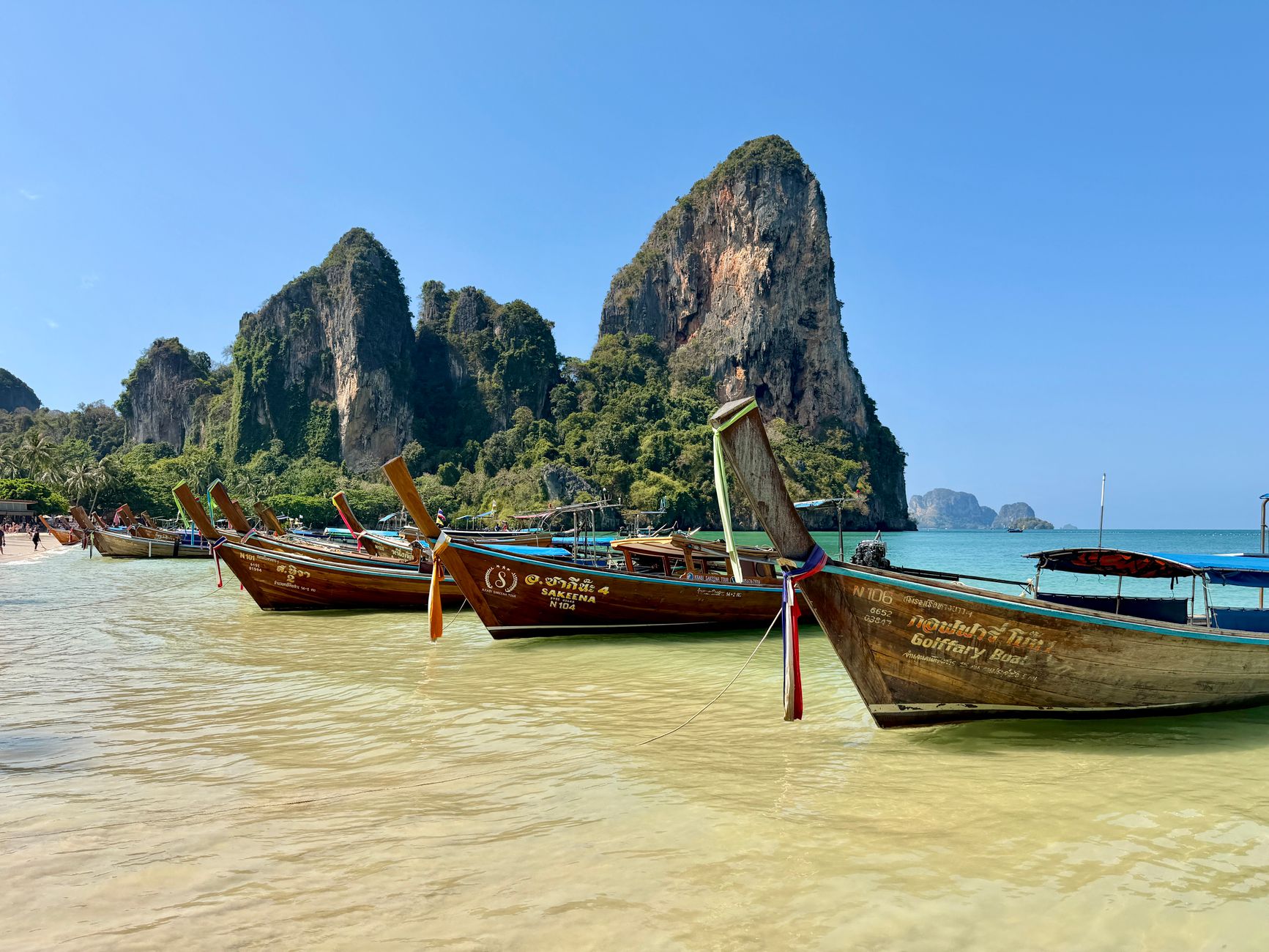
Short answer: November through February. Cool-season Thailand is dry, sunny and comfortable almost everywhere on the map — Bangkok's temples, the ruins of Ayutthaya and Sukhothai, the mountains around Chiang Mai and Chiang Rai, and the Andaman beaches at Krabi and Phuket all hit their stride in the same window. That is also, unsurprisingly, when everyone else goes.
The longer answer is that every month in Thailand has a case to make, and the "rainy season" scares off far more travelers than it should. Here is how the year actually unfolds, and how to match a month to the kind of trip you want.
Thailand's three seasons, in one minute
Thailand runs on three seasons rather than four. The cool season (roughly November to February) brings dry days, low humidity and evening temperatures that can dip into the 60s°F up north. The hot season (March to May) is exactly what it sounds like — April afternoons in Bangkok and the central plains regularly top 95°F. The rainy season (June to October) means afternoon downpours rather than all-day washouts: mornings are often clear, everything turns green, and prices and crowds drop.
One regional note that matters for beach planning: Thailand's two coasts have different rainfall patterns. The Andaman coast — Krabi, Phuket, Phi Phi, Phang Nga, the coast featured on the Thailand Tropical Escape — is at its calmest and clearest from November through April, with its wettest stretch from May through October, when some island boat trips run on reduced schedules or pause in rough weather.
Month by month
January. Peak season at its peak. Dry and sunny nationwide, cool mornings in Chiang Mai and Chiang Rai, flat seas off Krabi and Phuket. Book tours and hotels well ahead. Chinese New Year (late January or February, depending on the year) turns Bangkok's Chinatown into one long street festival.
February. Still dry, slightly warmer. Northern Thailand's flowers are out and the Andaman water is at its clearest. Late February is when the smoke from agricultural burning can begin to build in the far north — usually still fine, but sensitive travelers heading to Chiang Rai should watch air-quality forecasts.
March. The heat arrives and the crowds thin. Beaches remain excellent; central-plains temple days are best front-loaded into the morning. Burning-season haze in the far north is at its most noticeable in March and early April — Bangkok, Ayutthaya and the coast are unaffected.
April. Thailand's hottest month, and its most exuberant: Songkran, the Thai New Year water festival, runs April 13–15 and effectively turns whole cities into a nationwide water fight. Chiang Mai's old-city moat is the most famous battleground; Bangkok's Silom and Khao San areas are close behind. Expect heat above 95°F, some business closures around the holiday, and one of the most memorable three-day stretches Thailand offers.
May. The rains begin, and with them the value season. Hotel rates fall, the landscape greens up, and showers mostly come as late-afternoon bursts. A strong month for the cultural circuit — Bangkok, Ayutthaya, Kanchanaburi, Sukhothai — where a covered café is never far when a downpour hits.
June. A quiet, underrated month. Rain is moderate by rainy-season standards, crowds are low, and mornings are reliably workable. Andaman seas are livelier; island days need flexibility.
July. Similar to June, with school-holiday visitors nudging numbers up in the big destinations. Rice paddies in the north are at their most photogenic. Asanha Bucha and the start of Buddhist Lent (Khao Phansa) fall in July most years — temple-going days when alcohol sales pause.
August. Green-season Thailand in full. Waterfalls around Kanchanaburi and Chiang Mai are at their best, and the Erawan-style swimming holes actually have water in them. Afternoon storms are heavier; boat excursions off Phuket and Krabi are the most weather-dependent of the year.
September. Statistically the wettest month in most of the country, and the cheapest. Travelers who don't mind planning around rain get temples nearly to themselves. Not the month to build a trip around island-hopping.
October. The turn. Early October can still be soggy, but by the second half the rains taper, the air clears, and the country is green, washed and quiet — many seasoned Thailand travelers consider late October the sweet spot before peak pricing kicks in. Phuket's Vegetarian Festival (nine days, usually late September into October) is one of Thailand's most startling spectacles.
November. Arguably the single best month. Dry season returns, the landscape is still green from the rains, temperatures are mild, and the crowds haven't fully arrived. November's full moon brings Loy Krathong nationwide and the Yi Peng lantern festival in Chiang Mai — the floating lights on the water and lanterns in the sky that appear on every Thailand poster.
December. Glorious weather everywhere and the busiest holiday window of the year around Christmas and New Year. Early December offers near-January conditions with slightly softer prices; the last two weeks demand the earliest booking of any period.
Best months for first-timers
November through February, with November and early December the pick of the litter. A first Thailand trip usually wants to cover ground — Bangkok, the ancient capitals, the north — and cool-season weather makes long temple days genuinely pleasant rather than an endurance event. That window is when itineraries like the 12-day Thailand Discovery (Bangkok to Ayutthaya, Sukhothai, Chiang Mai and Chiang Rai, from $2,199 per person land only, on sale at $2,049 through Oct 15) show the country at its most comfortable.
Best months for beaches
November through April on the Andaman coast. Seas are calm, visibility is high, and the Four Islands trips out of Krabi and the Phi Phi and Phang Nga excursions from Phuket run on full schedules. December through February is the premium heart of it. Travelers combining city, culture and coast — the shape of the 15-day Grand Thailand Journey, which ends in Phuket — get the best of both in that same window.
Best months for fewer crowds
Late October and early November, before peak season fully lands, and May through June, after it ends. Both shoulders offer real savings and breathing room at headline sights like the Grand Palace and Wat Mahathat. September is the deepest-discount month for travelers who are genuinely rain-tolerant. A short cultural trip such as the 5-day Thailand Heritage Escape (Bangkok, Kanchanaburi, Ayutthaya, from $499 per person) is also easy to slot into a shoulder month, since it starts and ends in Bangkok.
Best months for festivals
April for Songkran, November for Loy Krathong and Yi Peng, with Chinese New Year (January–February) and Phuket's Vegetarian Festival (September–October) as strong supporting acts. Festival dates shift with the lunar calendar, so confirm the exact days for your year before locking flights — and book accommodation in Chiang Mai months ahead for the November lantern nights.
The bottom line
If weather is everything, go November through February and book early. If value matters more, aim for late October, May or June and accept a few afternoon showers. If a festival is the point, let Songkran or the November full moon set your dates. And if the choice still feels hard, the guide to choosing a Thailand tour operator covers the questions worth asking before you book — or start with the blog for deeper dives on each region.