Kanchanaburi and the River Kwai: A Guide to the Bridge, the Death Railway and Hellfire Pass
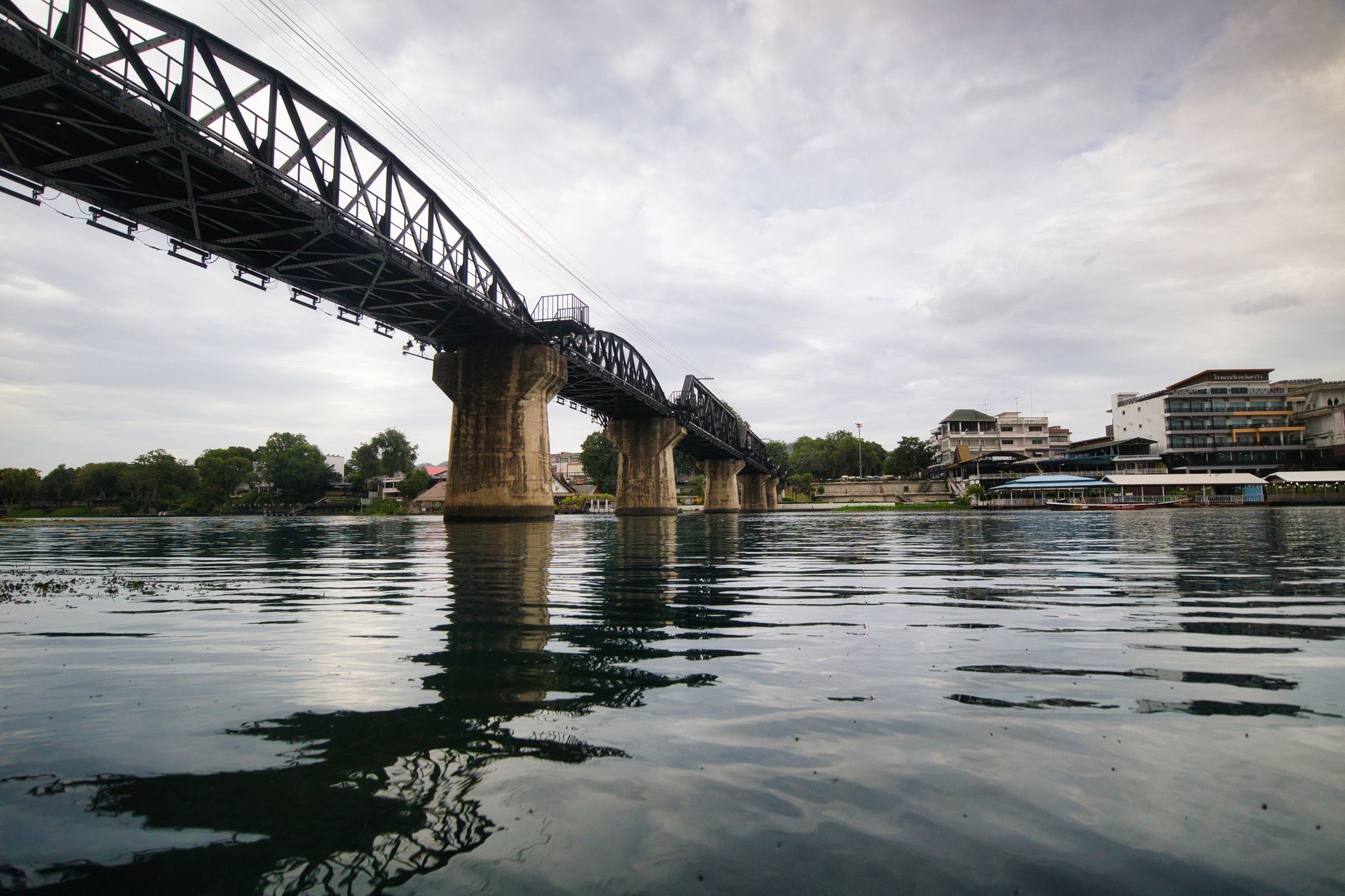
Two hours west of Bangkok, where the plains begin to crumple into the limestone hills that run toward the Myanmar border, sits a provincial town that carries more history per square kilometer than almost anywhere else in Thailand. Kanchanaburi is where the Death Railway crossed the River Kwai, where more than a hundred thousand prisoners of war and conscripted laborers worked under the Japanese army between 1942 and 1945, and where a string of memorials, museums and one still-operating stretch of track now tell the story. It is also, somewhat improbably, a beautiful place — teak forest, river light, mist on the hills at dawn.
A visit here is different in texture from a day among Ayutthaya's temples or a morning at the Grand Palace. It asks a little more of you, and it gives back something most Thailand itineraries don't: a reason to stand still. Here's how to do it properly.
The bridge itself
The famous steel-and-concrete bridge spans the Khwae Yai river on the northern edge of town. It is a working railway bridge — trains still cross it a few times a day — and between trains, visitors are free to walk out onto the span on the wooden walkways laid beside the rails. Refuge platforms jut out at intervals so you can step aside when a train does come through, slowly, horn sounding, close enough to touch.
Two things are worth knowing before you go. First, the bridge you see is substantially the original: the curved steel spans were brought from Java by the Japanese army in 1942, and only the straighter central sections are postwar replacements for spans destroyed by Allied bombing in 1945. Second, the bridge is the most crowded point on any Kanchanaburi day. Tour buses from Bangkok tend to arrive mid-morning and cluster between about 10am and 2pm. Come at 8am or in the last hour of light and you may share it with only a handful of people, the river traffic below, and the long shadows the trusses throw across the water.
Riding the Death Railway
Of the 415 kilometers of track the prisoners built between Thailand and Burma, one section remains in regular service: the line running west from Kanchanaburi to Nam Tok. Ordinary local trains cover it daily, and the ride is one of the most affecting things you can do in the province.
The highlight comes near Tham Krasae, where the train slows to walking pace to cross the Wang Pho viaduct — a long wooden trestle built hard against a cliff face, the river directly below, the original alignment hammered out by hand in 1943. Sit on the left side heading toward Nam Tok for the river views. The carriages are simple, the windows open, the pace unhurried; the whole run takes around two hours, and it reframes everything else you'll see that day. The scenery is gorgeous, and then you remember what it cost to put a railway through it, and the two facts sit uneasily together. That tension is the point of coming.
Hellfire Pass
About 80 minutes' drive beyond the town, Hellfire Pass is the deepest cutting on the whole railway — a narrow canyon of rock excavated almost entirely by hand. Prisoners working through the night by the light of burning torches gave the cutting its name. The railway is long gone from this section; what remains is a walking trail along the old railbed, through the cutting itself, with the drill scars still visible in the rock walls.
The site is anchored by the Hellfire Pass Interpretive Centre, a modern museum built and maintained with Australian government support, and it is excellent: measured, well-documented, built around recorded testimony from survivors. Allow 45 minutes for the museum and at least another 45 for the walk down into the cutting. The audio guide, narrated largely by former prisoners, is worth taking even if you normally skip them. Of everything in Kanchanaburi, this is the site visitors most often describe afterward as the one that stayed with them.
The museums and the cemetery in town
Back in Kanchanaburi town, the JEATH War Museum — the name is an acronym for the nationalities caught up in the railway's construction: Japan, England, Australia/America, Thailand, Holland — occupies a reconstruction of the bamboo huts the prisoners lived in, with photographs, drawings and artifacts displayed inside. It is a modest, older-style museum, and it is moving precisely because of that plainness.
A short distance away, the Kanchanaburi War Cemetery holds the graves of nearly 7,000 Allied prisoners, immaculately kept, arranged in long quiet rows under frangipani trees. Most visitors spend ten minutes here; it deserves twenty. Reading the ages on the headstones — many of them 21, 22, 23 — does more than any museum panel to make the numbers real.
How to structure the visit
Kanchanaburi can be done as a long day trip from Bangkok, and many travelers do exactly that: bridge, museum, cemetery, back by dinner. It works, but it compresses the most reflective stop in Thailand into a schedule with no room for reflection — and it usually means hitting the bridge at peak hours and skipping Hellfire Pass entirely, since the pass adds nearly three hours of round-trip driving.
The better pattern is a night in the province. Staying over gets you the bridge in evening or early-morning light, time for the train ride, and an unhurried run out to Hellfire Pass before the day heats up. Riverside lodges along the Khwae make the overnight an experience in itself: you eat dinner over the water, and the hills go violet at dusk.
This is how Asia Bound structures it. The Thailand Heritage Escape — a 5-day, 4-night small-group journey run by an independent local operator in Bangkok — pairs Kanchanaburi with Ayutthaya and the capital, from $499 per person land only (on sale at $479 through October 15). It starts and ends in Bangkok, which makes it an easy add-on to a wider Asia trip. Travelers with more time will find Kanchanaburi built into the 15-day Grand Thailand Journey as well, between Bangkok and the ancient capitals to the north. And if you're weighing how a place like this fits into a broader route, the guide to choosing a Thailand tour operator covers the questions worth asking.
A note on tone
Visitors sometimes worry about how to hold a river cruise and a war cemetery in the same day — whether enjoying Kanchanaburi's scenery somehow disrespects what happened there. The province itself has long since answered the question: the sites are presented with care, the town around them is cheerfully alive, and the men commemorated in the cemetery were, by every account the museums preserve, people who would have understood the appeal of a cold drink by a beautiful river. Come curious, dress respectfully at the memorials, put the phone away in the cemetery, and the balance takes care of itself.
Few places reward a traveler's attention like this one. The bridge gets the photographs; the railway, the pass and the rows of white headstones are why you'll remember it.