Why Thailand Feels Completely Different the Second Time You Visit
Ask someone who has been to Thailand twice which trip they would repeat, and the answer is usually the second one. Not because the first was wasted — the Grand Palace, Wat Arun and a long-tail boat through the Phang Nga limestone really are worth the queue — but because a first trip spends most of its energy on arriving. It goes to the sights that justify the flight. A second trip starts somewhere else entirely: the checklist is already done, and what is left is the country itself.
Here is what actually changes.
The itinerary stops being a list of monuments
First trips are organized around addresses. Second trips are organized around hours.
That sounds abstract until you see it in a day's plan. A first-timer in Ayutthaya takes in Wat Mahathat, Wat Phra Si Sanphet and Wat Chaiwatthanaram, and the day becomes a transit problem between three of them. A second-timer picks two, spends the hot middle of the afternoon at Bang Pa-In where the shade and the water are, then comes back to Wat Chaiwatthanaram near closing, when the brick goes orange and the coaches have gone. Same town, same temples, a completely different day — because the second visitor already knows what the brochure photo looks like in person and can spend their attention elsewhere.
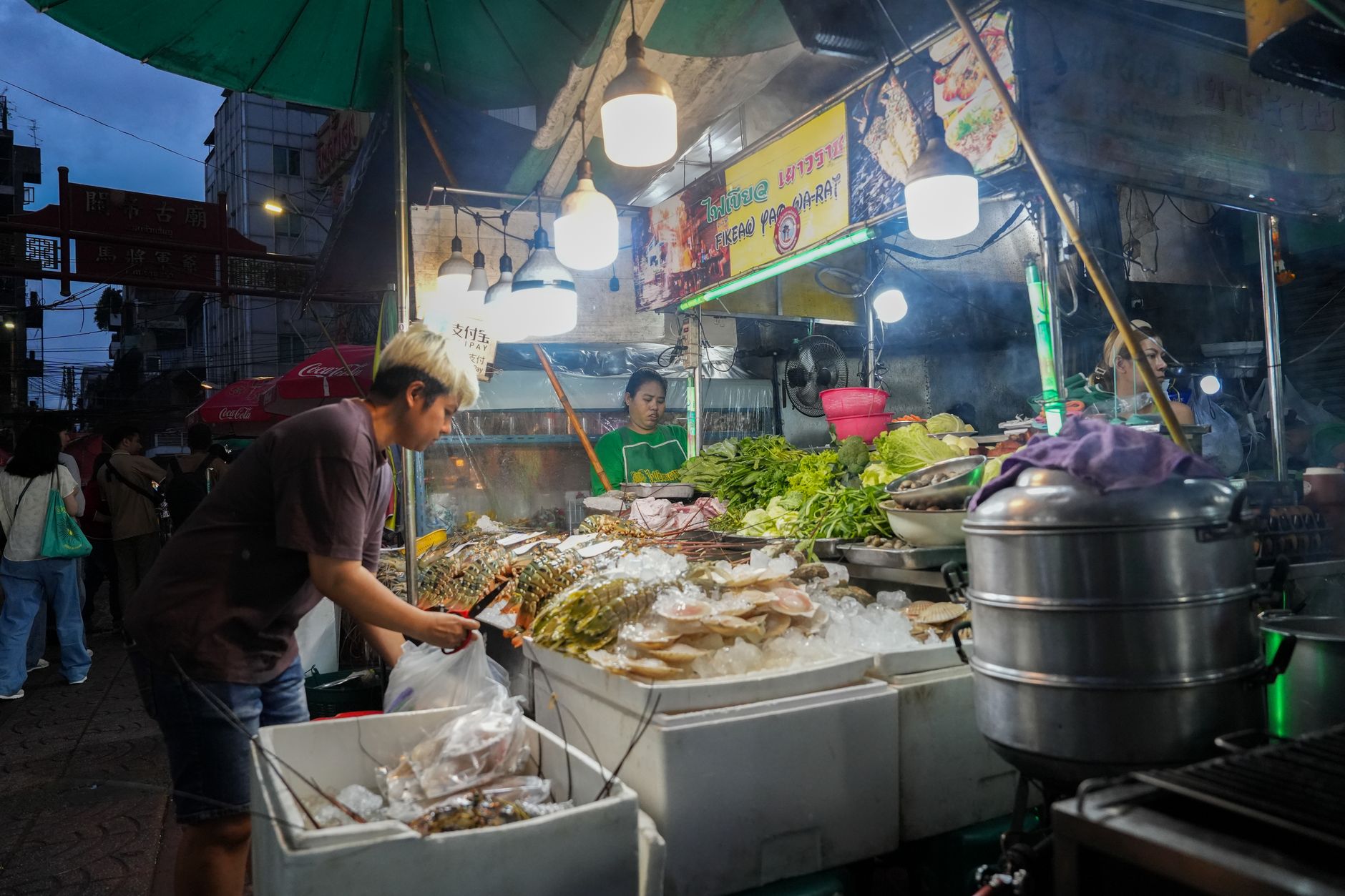
The same reordering happens everywhere. Bangkok's Grand Palace is a morning you do once. Chinatown at seven in the evening, the Flower Market late at night when the trucks come in from the provinces, a slow afternoon in Nimman in Chiang Mai — these are what travelers add the second time, and they are what they describe once they are home.
Food moves from a meal to a reason
On a first trip, food is fuel between sights plus one ambitious night out. On a second, it becomes the structure of the trip.
Part of that is confidence. Someone who has already eaten at a plastic stool on a Bangkok sidewalk and been fine will order more freely, point at more unfamiliar pots, and walk further into a market than the edge stalls. Part of it is that Thai food stops being one cuisine and turns into four or five. Northern cooking in Chiang Mai — khao soi, sai ua, the sour and bitter dishes that rarely reach export menus — tastes almost nothing like the coconut-forward central Thai food most visitors meet first. A second trip is where that distinction finally lands.
That gap is what the Thailand Culinary Journey is built around: 11 days / 9 nights through Bangkok, Ayutthaya and Chiang Mai, from $2,399 per person, land only ($2,085 on sale through Nov 14), with the market and kitchen time a sightseeing itinerary cannot spare.
The map gets wider and the days get slower
The third change is geographic. Repeat visitors go to the places the first trip skipped for time, and the list is remarkably consistent.
- Sukhothai, which almost no first trip includes and which many travelers who see it rank above Ayutthaya. Older, quieter, flatter, and built for a bicycle.
- Kanchanaburi and the River Kwai — the Death Railway, Hellfire Pass, the JEATH museum — which ask for a slower and more serious kind of attention than a temple morning.
- Chiang Rai, a few hours north of Chiang Mai, with Wat Rong Khun (the White Temple), the Blue Temple, and the Golden Triangle where the Mekong meets the borders.
- Krabi, chosen the second time by travelers who did Phuket first and want the same limestone scenery with fewer people in front of it.
Notice what these have in common: not one of them is a day trip from a beach hotel. They need nights, and nights are exactly what a first trip rations. Adding two or three is the single biggest difference between an itinerary that feels rushed and one that does not.
What that means when you are booking
A second trip rewards a longer, wider route and a slower pace. That is a planning decision rather than a travel-style one, and it is far easier to make before anything is booked than after.
For many repeat visitors it points to the 15 days / 13 nights of the Grand Thailand Journey, which runs Bangkok › Kanchanaburi › Ayutthaya › Sukhothai › Chiang Rai › Chiang Mai › Phuket and picks up nearly every stop a first trip leaves out, from $2,999 per person, land only ($2,549 on sale through Nov 14). If the second trip is a shorter add-on to other Asia travel, the Thailand Heritage Escape covers Bangkok, Kanchanaburi and Ayutthaya in 5 days / 4 nights, starting and ending in Bangkok, from $499 per person, land only. And if the first trip was all cities and temples, the Thailand Tropical Escape spends its 12 days / 10 nights on Bangkok, Krabi and Phuket instead, from $2,499 per person, land only.
All of these are small-group journeys operated on the ground by BCX, an independent local operator based in Bangkok — which tends to matter more on a second trip than a first, because the questions get more specific and so do the answers. Our guide to choosing a Thailand tour operator walks through what to compare, the FAQ covers deposits, single supplements and how flights work, and if the plan is still half-formed you can get in touch and talk it through.