Seven Ways to See Thailand Without the Crowds
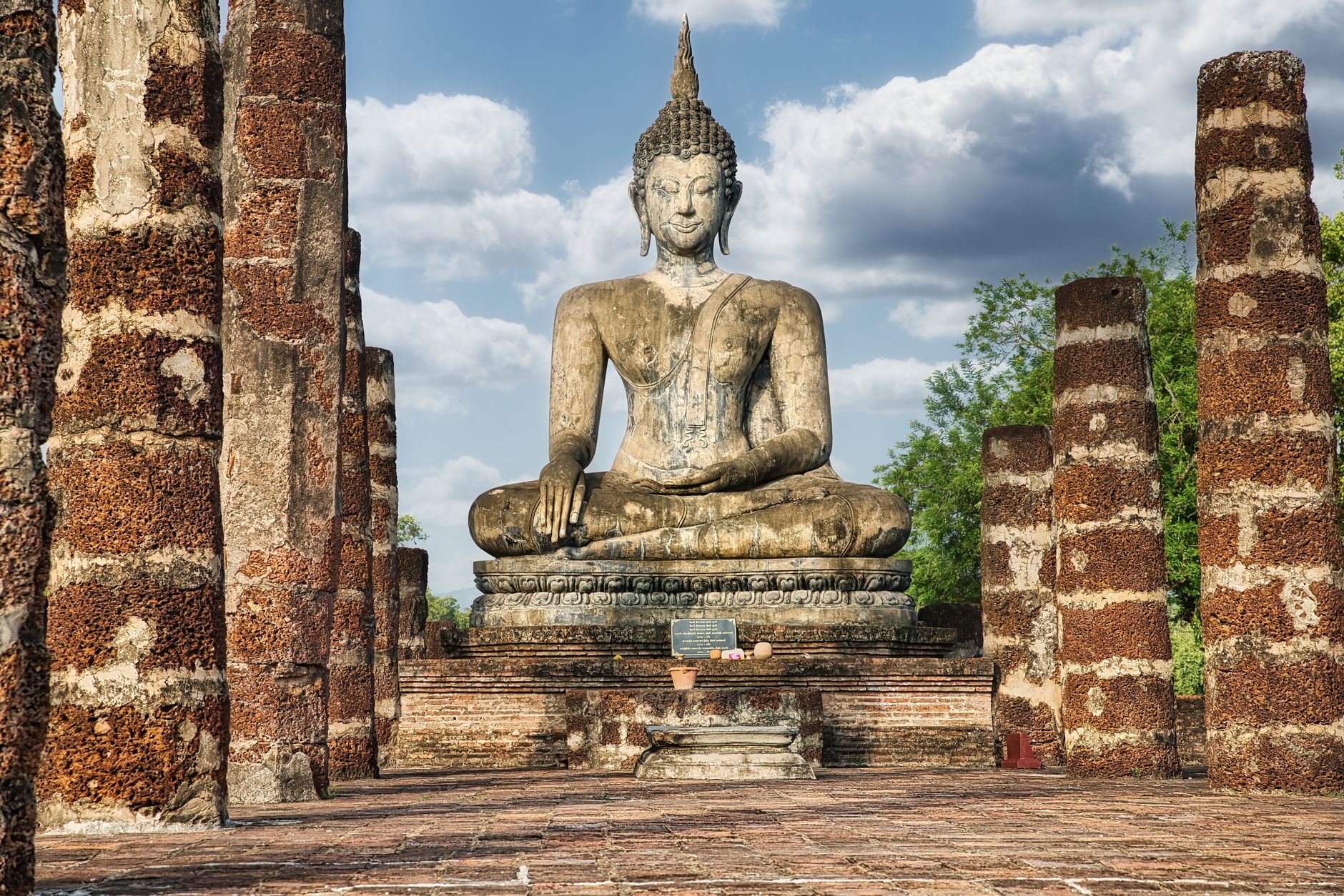
Thailand's most photographed places run on a schedule, and it isn't a secret one. Coaches leave Bangkok hotels between 8:00 and 9:00, reach the Grand Palace around 9:30, and clear out by early afternoon. Day-trip vans hit Damnoen Saduak in a block between 9:00 and 11:00. The crowd isn't spread evenly across the day or the country — it's concentrated into a few hours at a few addresses, which means it can be planned around rather than endured.
None of what follows requires skipping the famous places. It requires seeing them at a different hour, in a different order, or alongside quieter equivalents that most itineraries leave out. Seven ways to do that.
1. Treat opening time as the whole strategy
The single biggest difference between a serene Grand Palace and a shuffling one is about ninety minutes. The complex opens at 8:30 and stops admitting visitors in the mid-afternoon; the heaviest volume lands between 9:30 and 11:30. Being through the gate in the first half hour changes the experience of the Emerald Buddha chapel more than any other decision you can make.
The same logic holds at Wat Pho, which opens at 8:00. The reclining Buddha hall is busiest when the Grand Palace empties into it late morning, and noticeably calmer around midday when groups break for lunch and the river crossing.
One practical note that saves time at the gate: shoulders and knees covered, for everyone. Sarongs are available on site, but the queue for them arrives exactly when the crowd does.
2. Run Bangkok's temple circuit backwards
Almost every standard day does Grand Palace, then Wat Pho, then crosses the river to Wat Arun in the early afternoon. That means the ferry and Wat Arun's riverside terraces absorb the same people, in the same order, at the same time.
Reversing it works. Cross to Wat Arun first thing — it opens at 8:00 — climb the steep steps to the lower terraces of the central prang while the light is still low and the porcelain is worth looking at closely, then cross back for Wat Pho and the palace as the flow moves the other way.
Bangkok's non-temple sights reward the same contrarian timing. Chinatown is a night destination, not an afternoon one. The Flower Market at Pak Khlong Talat is open around the clock but is genuinely a working market between roughly 10:00 pm and 3:00 am, when the up-country trucks unload; visit at 2:00 in the afternoon and you'll see a fraction of it, with a fraction of the people.
3. Add Sukhothai, not just Ayutthaya
Ayutthaya is 80 kilometres from Bangkok, which makes it a day trip, which makes it busy. Sukhothai is roughly 425 kilometres north and requires an overnight — and that single logistical hurdle filters out most casual traffic.
The historical park's central zone opens at 6:30 in the morning. Rent a bicycle at the gate and the first hour is often close to empty: Wat Mahathat's lotus-bud chedi with its ring of standing disciples, Wat Si Chum's enormous seated Buddha visible through a slot in the wall. It is the same 13th- and 14th-century Siamese ruin-scape people come to Ayutthaya for, with a fraction of the foot traffic.
This isn't an argument for skipping Ayutthaya. It's an argument for seeing it at dusk instead of noon — Wat Chaiwatthanaram in the last hour of light, after the day-trip vans have gone back to Bangkok, is a different place entirely from the same temple at 11:00 am.
4. Go north for Chiang Rai's temples, and get there before the buses
Wat Rong Khun — the White Temple — opens at 8:00. The coaches from Chiang Mai take about three hours, which means the first of them arrive around 11:00. The two hours in between are the window.
The Blue Temple, Wat Rong Suea Ten, a few kilometres away, never draws the same volume at all, and the interior is arguably the more striking of the two. The Golden Triangle viewpoints over the Mekong thin out considerably after about 4:00 pm, once the day groups have turned back toward town.
5. Pick the month on purpose
Thailand's crowd curve tracks its weather curve almost exactly. November through February is dry, cool and busy, and the last week of December through the first week of January is the hardest time of year to find a quiet temple courtyard anywhere in the country.
Late May, June and September sit at the other end. Green season rain in most of the country arrives as a heavy burst in the afternoon rather than a full washout day, sites are visibly less crowded, and hotel rates fall. If crowds are the thing you're optimising against, those months are the lever.
Two dates to actively avoid if quiet is the goal: Chinese New Year, when domestic and regional travel spikes, and Songkran in mid-April, which is wonderful and is the opposite of peaceful.
6. Do the markets early, or don't do them
The two famous markets outside Bangkok are the clearest example of timing beating luck.
- Damnoen Saduak floating market. Boats start moving around 7:00 am. Tour coaches arrive between 9:00 and 11:00. Before 8:30 it functions as a canal where people buy things; after 9:30 it functions as a place where people photograph a canal.
- Maeklong Railway Market. The awnings retract for a passing train only a handful of times a day, and the published timetable shifts — confirm it locally on the day. The later slots consistently draw the bigger audience, so aim at an early one.
- Both in one morning. They're close enough to combine, and the combination only works in the early direction: Maeklong first or Damnoen Saduak first, but starting at dawn either way.
7. Build the trip so the famous stop isn't the whole day
The structural fix is to stop building days around single headline attractions. An itinerary that moves — Bangkok, then a river town, then a northern historical city, then the hills — spends most of its time in places that were never on the crowd curve to begin with.
Kanchanaburi is the clearest case. The River Kwai bridge itself gets day-trip volume from Bangkok in the middle of the day, but Hellfire Pass in the early morning is quiet, often almost solitary, and is the more affecting of the two sites by a distance.
This is also where a small group and a local operator earn their place. Two of Asia Bound's Thailand journeys are structured this way. Thailand Discovery runs 12 days and 10 nights — Bangkok, Ayutthaya, Sukhothai, Chiang Mai, Chiang Rai — from $2,199 per person, land only, currently $2,049 on sale through October 15. The shorter Thailand Heritage Escape covers Bangkok, Kanchanaburi and Ayutthaya in 5 days and 4 nights, from $499 per person land only ($479 on sale through October 15), starting and ending in Bangkok. Both are run on the ground by BCX, an independent local operator based in Bangkok, which is what makes the early departure times and the reversed running orders above practical rather than theoretical.
If you're weighing how a trip gets assembled in the first place, the guide to choosing a Thailand tour operator covers what to ask about group size, pacing and who actually runs the days on the ground.
Thailand rewards travellers who are willing to be somewhere at 6:30 in the morning, to cross a river in the unfashionable direction, or to spend a night in a town most itineraries drive past. The crowds are real, but they are also predictable — and predictable is the same thing as avoidable. Questions about timing a specific trip can go through the contact page.